Does salt air damage stucco, glass and solar panels?
By the Sea Spray Pros crew · 6 min read
Yes — but slowly, which is exactly the problem
Salt air doesn't damage a home the way a storm does. It works in coats: microscopic salt crystals ride the marine layer inland — well past Pacific Coast Highway — and settle on every exterior surface, every day. Each layer is invisible. A year of layers is not.
Salt is hygroscopic, meaning it pulls moisture out of the air and holds it against whatever it's sitting on. That's why coastal homes corrode, etch and stain faster than the same materials inland: the salt keeps surfaces subtly damp long after the fog burns off.
What it does to each surface
Stucco: salt-fed moisture feeds algae and mildew, especially on north-facing walls and under eaves. What looks like 'the paint getting old' is usually a living layer that soft washing removes — and high-pressure washing smears.
Glass: salt film builds into a haze that ordinary window washing can actually make worse, because soap residue gives the next layer of spray something to grip. Pure deionized water washing removes the film and leaves nothing behind.
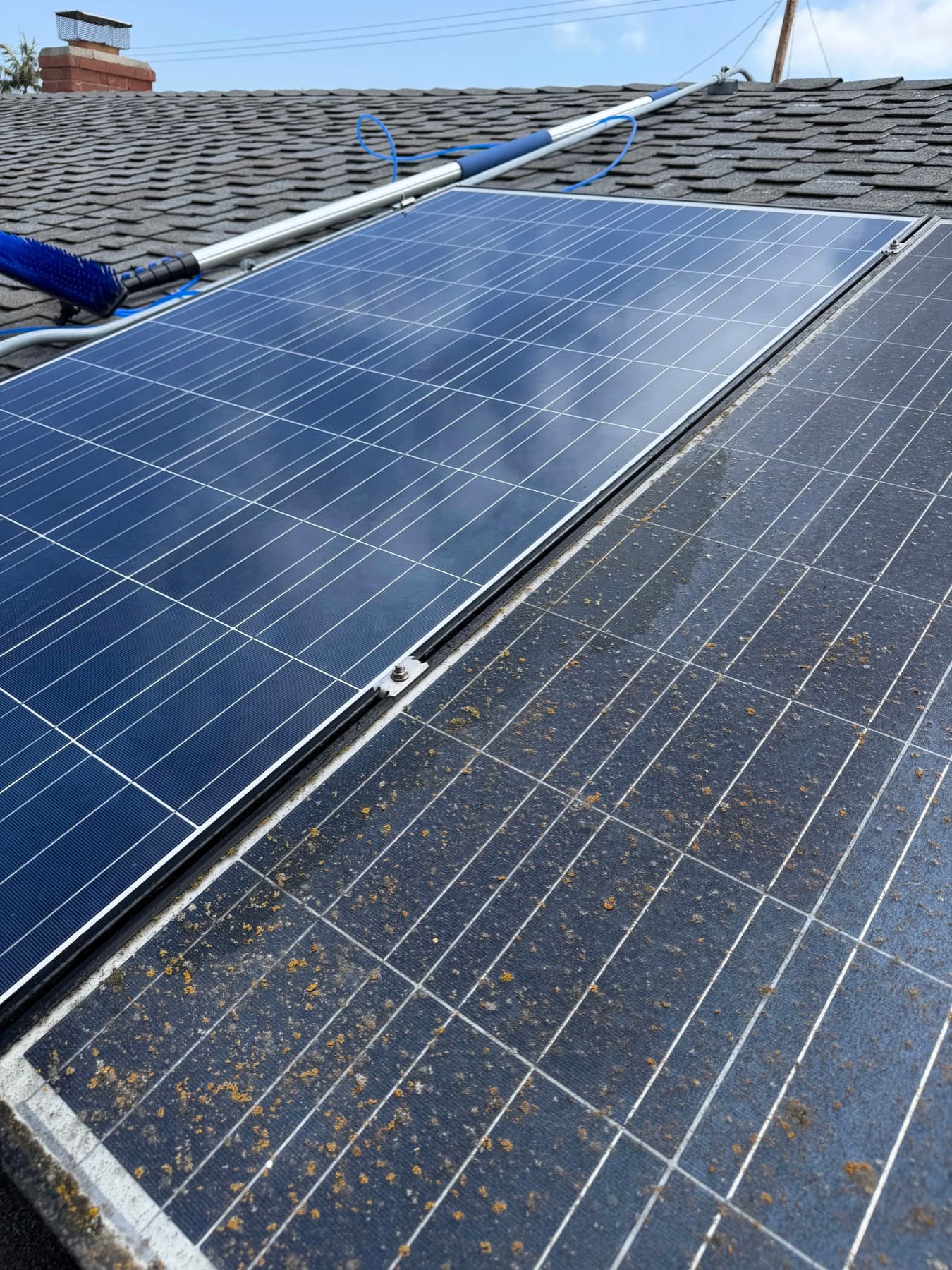
Solar panels: the same haze that fogs your windows sits on your panels, scattering light before it reaches the cells. On coastal Orange County arrays, the film is usually thick enough within four to six months to show up in production numbers.
Metal and stone: fixtures, railings and hardware corrode at the salt line first; unsealed concrete and natural stone absorb salt-laden moisture that leaves efflorescence — the chalky white bloom you see on coastal hardscape.
The schedule that stays ahead of it
Beachside (within about a mile of the water): windows and panels quarterly, full exterior soft wash yearly, hardscape sealed and re-checked every two to three years.
Coastal-adjacent (one to three miles): windows and panels twice a year, exterior wash every twelve to eighteen months.
The math favors maintenance heavily. A recurring cleaning plan costs a small fraction of repainting etched stucco, replacing corroded fixtures, or losing years of solar production to haze.
Quick answers
How far inland does salt air reach?
+
Measurable salt deposition typically extends two to three miles inland in Orange County, further on windy days. Fountain Valley, Costa Mesa and Westminster homes all carry coastal film — it just builds slower than in Huntington Beach or Newport.
Can I just rinse surfaces with a garden hose?
+
Rinsing helps between professional cleanings, but hose water dries into its own mineral spots and won't touch bonded salt film or biological growth. Think of it as brushing between dental cleanings.
Sooner is cheaper than later.
Text a few photos of the property to (714) 594-9648 — free itemized quote, usually back within 24 hours.